South East Asia is often thought of as a very far away and exotic destination for families in Europe. The truth is that with daily direct flights from most European hubs to Singapore, Bangkok and Kuala Lumpur, and cheap regional airlines to hop between countries, many of South East Asia’s top destinations are accessible and affordable for families, whether it’s for a two-week family holiday or a family gap year. (Travelling without kids on a budget? Read our reasons to travel Southeast Asia on a budget.)
We spent 8 months in South East Asia as part of our family Gap Year with our young daughters. We’ve picked out our favourite destinations in South East Asia: although some may seem off the tourist trail, all are safe and accessible to families.
Quick summary (updated November 2026)
- Easiest first stop: Singapore (Sentosa) or Kuala Lumpur, both with direct flights from Europe.
- Best beaches for kids: Perhentian Islands (Malaysia), Koh Lanta (Thailand), Gili Meno (Indonesia).
- Best for a long stay: Hoi An (Vietnam), where we lived for two and a half months, and Uluwatu (Bali).
- Best time to go: November to March for Thailand, Vietnam’s south and Malaysia’s west coast; April to September for Bali, the Gilis and the Perhentians.
- Visas: most EU, UK, US and Australian passports get visa-free entry to Singapore, Malaysia, Thailand and Vietnam (short stays); Indonesia issues a visa on arrival. Rules change often, so always check the official sites before you fly.
Table of contents
- 1. Singapore
- 2. Kuala Lumpur, Malaysia
- 3. Georgetown, Penang (Malaysia)
- 4. Perhentian Islands, Malaysia
- 5. Ho Chi Minh City, Vietnam
- 6. Hoi An, Vietnam
- 7. Uluwatu, Bali, Indonesia
- 8. Ubud, Bali, Indonesia
- 9. Gili Meno, Indonesia
- 10. Koh Lanta, Thailand
- Flying to and From Asia
- South East Asia with Kids: FAQ
- Check our video out

1. Singapore
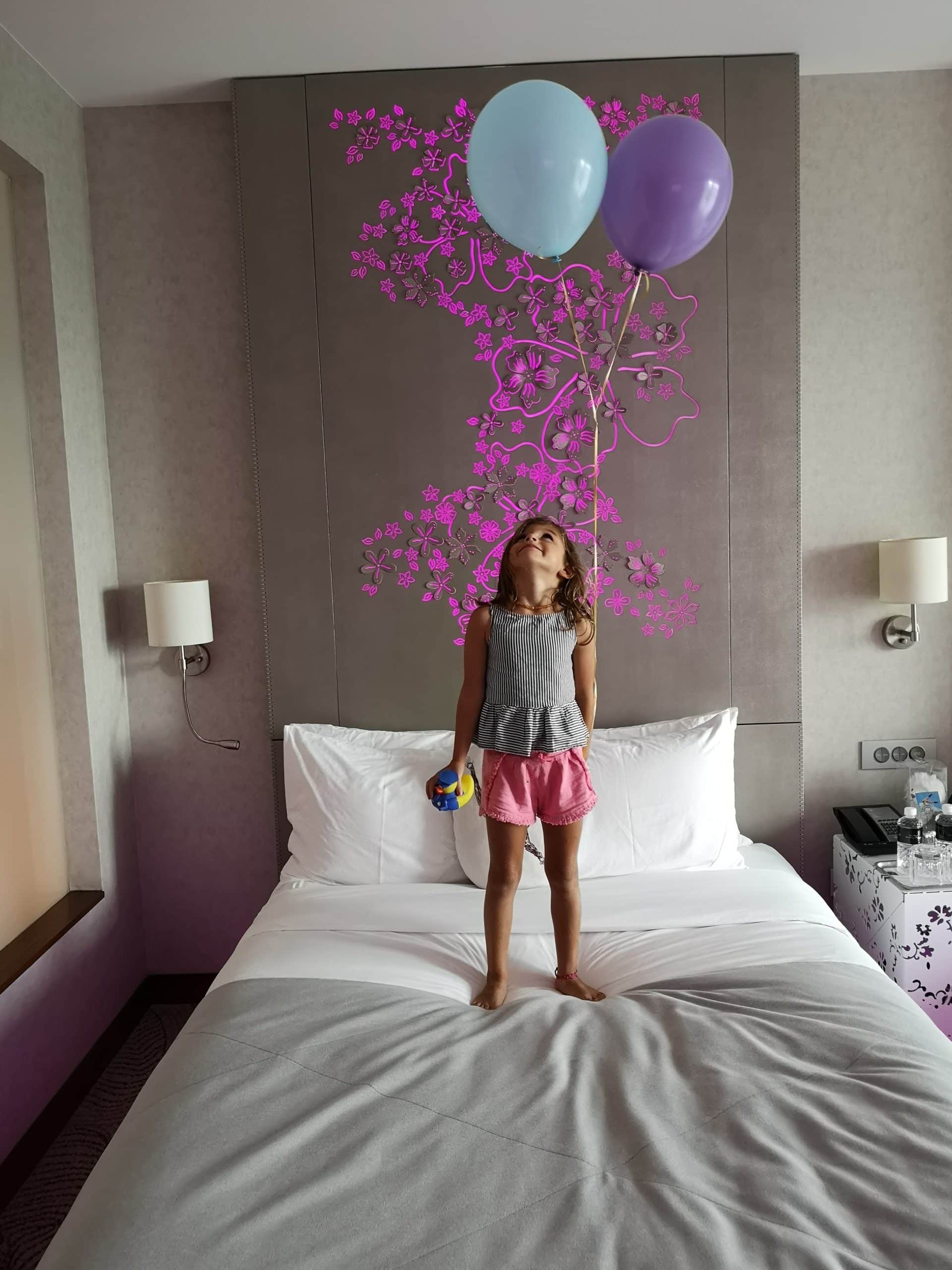
Due to its strategic location, Singapore is a great hub to fly in and out of: we would recommend 2-3 days in the city and staying on Sentosa Island, where you have lots of family attractions including a beach on your doorstep. Most hotels have a free shuttle bus to take you into the city centre. We stayed at the very family friendly W Singapore – Sentosa Cove.
Be sure to visit the Gardens By The Bay, featuring futuristic-looking super-trees that tower over the gardens as well as cooled conservatories and glass greenhouses that are home to a stunning myriad of flora.

2. Kuala Lumpur, Malaysia
KL is such a great city for families: a melting pot of cultures and history, it’s a must visit. We only touched the surface, but with great public transport and easy to use taxi apps like Grab, getting around the city with kids is hassle free. There are so many parks and attractions for children that I guarantee you will never get bored. One of our favourite things to do in the city was visiting the KL Bird Park right in the centre and walking around the biggest open air aviary in the world.

3. Georgetown, Penang ( Malaysia)
Although we were disappointed with the beaches in Penang, George Town is definitely worth a visit, even if you just go to eat yourself silly: Penang is famous for some of the best food in the whole of Malaysia, from delicious curries to seafood. Make sure you stroll around the old town searching for street art and visit the Blue Mansion (you can book your stay here). Penang is easy to get to from Kuala Lumpur: we took the train and ferry, which was an experience in itself and the kids loved it. The island also has some very well organised kids’ attractions like the Entopia butterfly farm that we visited.

4. Perhentian Islands, Malaysia
If you’re an adventurous family like us and love island life, white sandy beaches and snorkelling adventures, the Perhentian Islands are a must visit. Tourism on the islands is still low key, with no big five star resorts. Note that the islands largely close during the north-east monsoon (roughly November to February), so plan your visit between March and October.
Our two daughters Bella and Maya had just learnt to swim, so we were excited to take them on their first snorkelling trip. You can imagine their excitement when we told them we were visiting a place called Nemo’s garden, to find a real life Nemo. Our days were spent playing on the beach building sand castles and snorkelling. Our trip here was one of the highlights of our 8 months in Asia.
We stayed one week at the Perhentian Island Resort, which has probably the best beach on the island of Pulau Perhentian Besar.

5. Ho Chi Minh City, Vietnam
HCMC is a great starting point in the south of the country. We always recommend visiting Ho Chi Minh City with Kids: big cities are the beating heart of the country and show you so much about the inner workings of a place and its people. You might see some of the strangest sights and eat the strangest of foods, but this is when the best travel memories are made.
HCMC is also a great starting point to visit the Mekong Delta. A word of warning: the busy roads and traffic take a bit of getting used to. If you have young kids make sure you use a sling or baby carrier, as pushchairs are difficult to manoeuvre on the uneven pavements and roads.

6. Hoi An, Vietnam
We completely fell in love with Hoi An, so much so that we made it our home for two and a half months during our trip. The beauty of Hoi An is that you have a rich, well preserved historical town sitting on the river, and only 2km from the town you have An Bang beach.
Hoi An old town is small enough to walk or cycle around, but also big enough to get lost in. The buildings have been preserved and traditionally restored. Throughout the year there are numerous cultural events celebrating Vietnamese culture and history: we were lucky enough to be there during the TET new year celebrations in February, when the whole town is decorated with brightly coloured lanterns.
For kids there are loads of things to keep them amused: our favourites were the cat cafés, the Thanh Ha pottery village and best of all An Bang Beach for swimming and sandcastles.
You will also notice there are so many talented artisans in Hoi An: make sure you get something unique made at one of the many tailor shops.

7. Uluwatu, Bali Indonesia
Although Indonesia, and especially Bali, has been on the radar of Australian families for years, it has now become more accessible to Europeans too. Most families immediately head to Sanur, but we would recommend heading to Uluwatu instead. It’s quieter and slightly off the tourist trail, famed for its surf breaks.
Get out and explore some wild beaches: we also managed to find some great beaches for swimming with the girls. Thanks to the many surfers that visit the area there is a great laid back atmosphere and lots of healthy, family friendly restaurants. For the best experience try renting a small villa near Uluwatu.

Our Video in Uluwatu with Kids
8. Ubud, Bali, Indonesia
Ubud is a must see if you visit Bali. It’s called the cultural heart of Bali, although the town centre is very busy and overrun with tourists. If you venture out into the countryside and the maze of paddy fields you get a glimpse of traditional Balinese life, which involves working in the paddy fields and taking offerings to the Hindu temples.
Make sure you hire a driver (or scooters, if you are confident riders) and explore the outskirts of Ubud. Our favourite attractions were the Monkey Forest and Tirta Empul temple, an important temple complex and holy mountain spring located in the village of Manukaya in central Bali.

9. Gili Meno, Indonesia
If the motorbikes and traffic of Bali all get a bit too much, head to Gili Meno, a short fast-boat ride from Bali. There are no motorised vehicles on the islands: horse and cart or bicycle is the main mode of transport. Our favourite island was Gili Meno. Although there are fewer amenities it is quieter, and if you go snorkelling off the beach I guarantee you will spot a turtle. We stayed at the quiet boutique Hotel Seri Resort.
10. Koh Lanta ,Thailand
Koh Lanta is such a family friendly island: you can get there from either Phuket or Krabi airport and then arrange a transfer, including the ferry, to the island. The beaches are great for kids, with shallow, calm water.
There are various accommodation options, from 5* hotels (we stayed at the family friendly Avani+ Koh Lanta, the former Crown Lanta Resort, fully renovated in 2021) to rustic beach bungalows. There are lots of outdoor activities to do, from kayaking to snorkelling.

Flying to and From Asia
The low-cost long-haul routes we used in 2018 no longer exist, but getting to South East Asia from Europe is easier than ever. Singapore and Bangkok are the two best gateways: both have daily non-stop flights from London, Paris, Frankfurt, Munich, Amsterdam, Zurich, Milan and Rome with Singapore Airlines, Thai Airways, British Airways, Lufthansa, Air France, KLM and Swiss, among others. Kuala Lumpur also has direct flights from London and Paris.
For the lowest fares with a family, look at one-stop flights via the Gulf (Qatar Airways, Emirates, Etihad) or Istanbul (Turkish Airlines): they often cost considerably less than the non-stop options, and a short layover is actually a welcome break for young kids. Scoot also flies direct between Athens and Singapore and is usually the cheapest way into Asia from southern Europe.

Our tips for long-haul flights with kids:
- Choose a night departure from Europe so the kids sleep for most of the flight.
- Book seats together as soon as you buy the tickets; some airlines charge for this on the cheapest fares.
- Check the baggage allowance carefully: basic fares often include hand luggage only.
- Once in Asia, use AirAsia, Scoot, VietJet or Jetstar for the hops between countries: a Singapore to Bangkok or Bali flight is often cheaper than a European train ticket.

Before you go, read our packing list for Southeast Asia with kids and our tips on keeping children healthy while travelling. Don’t forget to check why you need travel insurance in Southeast Asia, and if you are hopping over to the Gilis, our guide to Gili Air with kids.
South East Asia with Kids: FAQ
Is South East Asia safe for families?
Yes. Singapore, Malaysia, Thailand, Vietnam and Bali are among the safest and most child-friendly places we have travelled. The main risks are traffic, sun and stomach bugs, not crime: use a carrier instead of a pushchair in big cities, drink bottled or filtered water and keep up with routine vaccinations.
What is the best time of year to visit South East Asia with kids?
November to March is the dry season for Thailand, southern Vietnam, Singapore and Malaysia’s west coast, with the most comfortable temperatures. Bali, the Gili Islands and Malaysia’s east coast (Perhentians) are best from April to September. The region is warm all year, so a wet-season trip just means short afternoon showers in most places.
Which country in South East Asia is best for a first family trip?
Thailand or Malaysia. Both have excellent infrastructure, English is widely spoken, distances are short and there is a good mix of city, culture and beach. Singapore is the easiest of all but also the most expensive; Vietnam and Indonesia are better once you have found your feet in Asia.
How much does a family trip to South East Asia cost?
Far less than a holiday in Europe once you have landed. Flights are the biggest expense. On the ground, a family of four can eat, sleep and get around comfortably on a mid-range budget in Vietnam, Thailand and Malaysia, with Singapore and Bali’s resort areas noticeably pricier. Travelling slowly, as we did in Hoi An, and renting apartments by the month brings costs down further.
Check our video out

Eternal adventurer and wanderlust seeker! Always thinking about (and planning) our next adventure, hence the name”Thinking Nomads”!
Wife to Marco and mamma to Isabella and Maya. India, Nepal and Vietnam are my top three countries!
Norway, Iceland and South Africa are top of my bucket list!