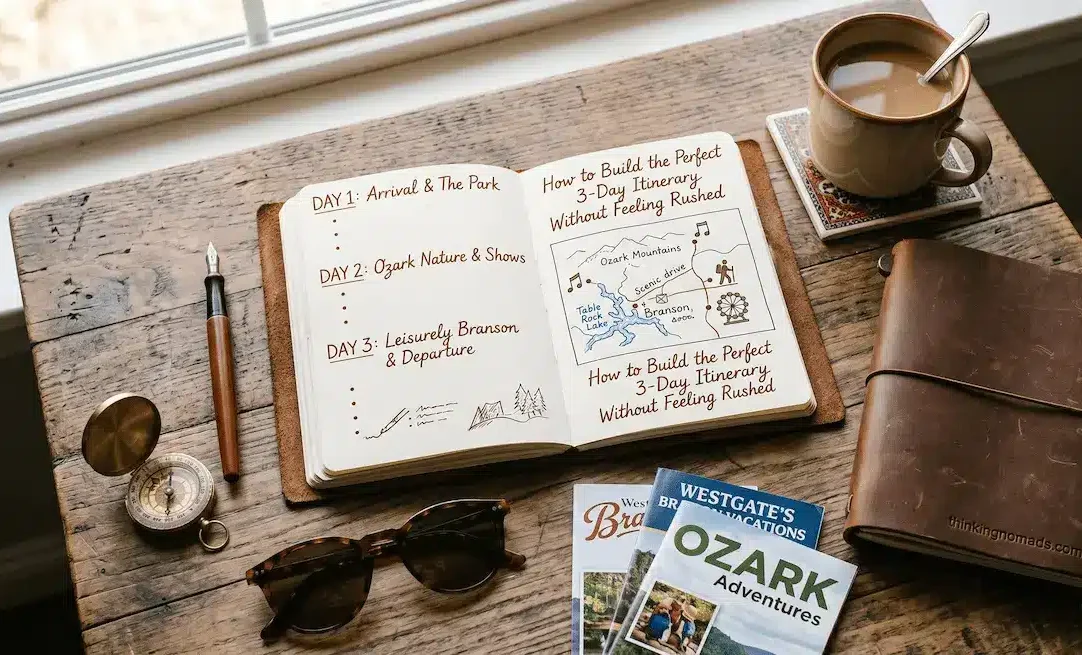
Three days sounds like enough time to truly explore a destination, but without a solid plan, it disappears faster than you expect. You end up exhausted, having barely scratched the surface of what you came to see.
The good news is that a well-structured 3-day itinerary does not have to feel like a military operation. Taking a trip to Branson, Missouri is the ideal way to see how a little planning can help you experience a place fully while still feeling relaxed the entire time.
Why Your Destination Sets the Tone for Everything
Before you map out a single hour, you need to understand what kind of destination you are working with. Some places reward Slow travel and an open itinerary. Others are packed with attractions spread across a wide area, requiring more movement between spots. If you are planning a trip to Branson, Missouri, for example, the destination itself lends structure to your days because it blends live entertainment, outdoor scenery, and family-friendly attractions in a way that flows naturally across three days.
Travelers who prefer their accommodations to handle some of the planning for them often find that Westgate’s Branson vacations are the ideal starting point, as they are built around the 3-day format with the surrounding area’s highlights in mind, including access to the Ozark Mountains and nearby theme park experiences.
Choosing a destination where the local offerings align with a short stay is half the battle won before you even begin.
Build Around Anchors, Not Checklists
The biggest mistake people make when planning a 3-day trip is trying to see everything. That thinking turns a vacation into a chore. Instead, pick two or three anchor experiences for each day. These are the things you absolutely want to do, the ones that made you choose the destination in the first place. Everything else gets scheduled loosely around them.
For instance, if your anchor on Day 1 is a full afternoon at a theme park or a scenic outdoor attraction, do not also try to squeeze in a live show, a shopping strip, and a full sit-down dinner reservation at a popular restaurant. Pick one or two supporting activities that complement the anchor without competing with it for your energy.
Give Your Days a Natural Shape
Mornings and evenings behave differently when you are traveling. Mornings tend to offer shorter lines, cooler temperatures, and a sense of energy that makes them ideal for physically demanding or time-sensitive activities. Evenings are better suited to dining, live entertainment, leisurely walks, or anything that allows you to wind down.
Build your itinerary so that each day has a natural arc. Start with something that requires focus or effort, take a proper midday break, and then ease into the evening with something enjoyable but less demanding. This rhythm prevents the kind of fatigue that creeps up on you by Day 2 and ruins Day 3.
Account for Travel Time Honestly
People routinely underestimate how long it takes to get from one place to another, especially in an unfamiliar destination. Look up actual travel times between your planned stops, not idealized ones. Add a buffer of at least fifteen to twenty minutes between each activity.
This is not pessimism. It is the difference between arriving somewhere calm and collected versus rushing in frustrated because the previous stop ran longer than expected. And they almost always run longer than expected. Factor in parking, walking from the lot to the entrance, and any queues you might encounter upon arrival, because these small delays stack up quickly and silently.
Road conditions, one-way streets, and unfamiliar navigation in a new city can also add unexpected minutes to what looks like a straightforward route on a map. Treating your travel time estimates as flexible rather than fixed keeps the day functional without locking you into an unrealistic pace.
Leave White Space in Your Schedule
A 3-day itinerary with every hour accounted for is not an itinerary. It is a to-do list with a sunset. You need white space, meaning unscheduled time that you can use however the moment calls for it. Maybe you stumble onto a market you did not know about. Maybe a meal turns into a two-hour conversation with someone interesting. Maybe you simply want to sit somewhere and absorb the atmosphere without rushing off to the next thing.
White space also gives you a buffer if something runs over or gets canceled. Without it, one disruption unravels the whole day. It also creates room for spontaneous decisions, which are often the ones that produce the most memorable moments of any trip. Think of unscheduled time not as wasted time but as a deliberate investment in the quality of your experience rather than the volume of it.
Day Three Deserves Special Attention
Most people treat the final day of a short trip as a half day because checkout and travel home eat into it. Plan accordingly. Do not schedule your most ambitious activity on Day 3. Save that for Day 1 or 2 when you have the full day ahead of you and the energy to match.
On your last day, opt for something that ends gracefully, a leisurely breakfast, a short walk through a neighborhood you enjoyed earlier, or a visit to a spot you passed on a previous day and wanted to revisit. This way, the trip ends on a calm note rather than a frantic one.
Let Go of the Fear of Missing Out
Perhaps the single greatest obstacle to a relaxed 3-day itinerary is the anxiety of not doing enough. Travel culture has a way of making people feel that if they did not see every landmark or try every recommended restaurant, the trip was somehow incomplete. That thinking will exhaust you in any destination, regardless of how well you planned.
A 3-day trip done well means you leave having genuinely experienced a place rather than having photographed your way through a checklist. Prioritize depth over breadth, choose quality moments over quantity, and resist the urge to cram. The best travel memories rarely come from the busiest days.

Lived in England since 1998 and travelled the world since 2005, visiting over 100 countries on 5 continents. Writer, blogger, photographer with a passion for adventure and travel, discovering those off beat places not yet on the tourist trail. Marco contributes the very best in independent travel tips and lifestyle articles.
