
There’s a particular kind of chaos that comes with traveling for the first time with a dog. Ours involved a two-hour traffic jam, a very unhappy stomach (not ours), and the realisation, somewhere on a motorway lay-by, that we had packed three types of snacks for ourselves and forgotten the dog’s bowl entirely.
If you’ve been thinking about bringing your dog along on your next adventure — whether it’s a weekend road trip or a longer journey — we want to save you from that lay-by moment. Because travelling with a dog genuinely is one of the most rewarding things we’ve done. You just need to go in with your eyes open.
Here’s what we’ve learned.
Start Weeks Before the Trip, Not the Morning Of
This is the single biggest mistake first-time dog travelers make, and honestly, we made it too. You cannot expect a dog that’s only ever been in a car for a ten-minute vet visit to be perfectly calm on a four-hour drive. Travel is a skill for dogs, the same as it is for people, and it takes a bit of practice.
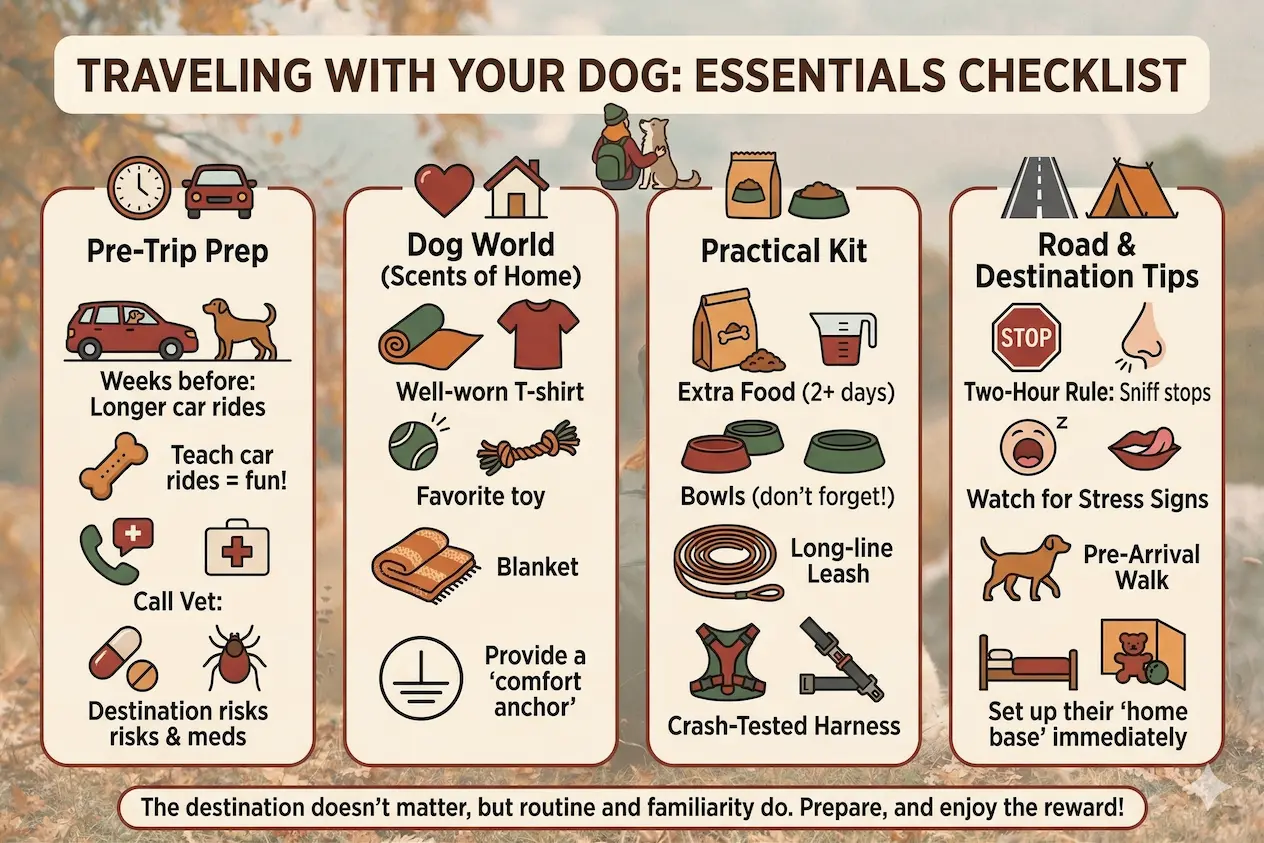
In the weeks leading up to your trip, start taking your dog on progressively longer car rides — just around the block at first, then to a park, then a quick overnight somewhere nearby. You’re teaching them that the car doesn’t always mean stress, and that journeys end somewhere fun. It’s a small investment of time that pays off enormously when you’re finally on the open road.
Also call your vet before any trip. Not just to check vaccinations are current (though they should be), but to ask about any destination-specific risks: tick populations, regional diseases, what to watch for. If you’re traveling to somewhere with a warmer climate, heart-worm prevention is worth a conversation. Your vet has seen what goes wrong, so ask them directly.
The Art of the Tired Dog
One of the best travel hacks nobody tells you: exhaust your dog before you leave. A big walk, a proper run, a long game of fetch in the garden — whatever drains their battery. Do it a few hours before you set off. A tired dog will sleep through the first half of most journeys, which makes life significantly easier for everyone in the vehicle.
One more thing: skip the big meal before departure. Motion sickness is very real for dogs, and a lighter stomach dramatically reduces the chances of needing to pull over urgently. Feed them after you’ve been driving for a while and they’ve had a chance to settle.
Pack Their World, Not Just Their Stuff
When dogs travel, what helps them most isn’t new toys or expensive gear — it’s scent and familiarity. The things that smell like home are genuinely grounding for a dog in an unfamiliar environment.
Before we go anywhere, we throw in a well-worn t-shirt (something that’s been worn recently, not washed), their favorite toy, and a blanket from home. These become what you might call comfort anchors — the signal to your dog that even in a strange place, they’re safe.
Beyond that, the practical kit:
· Food: Pack more than you think you need — at least two extra days’ worth. Switching food mid-trip because you ran out is a recipe for digestive trouble in a dog that’s already out of routine.
· Bowls and a measuring cup: Guessing at portion sizes leads to overfeeding or underfeeding, neither of which helps an already-anxious dog.
· A long-line leash: Standard leads are fine for pavements, but at rest stops and open spaces, a long-line gives your dog the chance to properly sniff and decompress, which matters more than you’d think.
· A crash-tested harness: If your dog travels in the car unrestrained, they’re a safety risk to themselves and to you. A proper harness designed for car travel is non-negotiable.
Road Trips: The Two-Hour Rule
For long drives, we follow a simple rhythm: every two hours, we stop, get out, and let the dog sniff. Sniffing isn’t just a toilet stop — it’s how dogs process and decompress. It actively lowers their stress levels. If your dog has been cooped up in a moving vehicle for hours, five minutes of proper nose-to-ground exploration does more for their well-being than almost anything else.
Pay attention to the signs that your dog is getting overwhelmed. Excessive yawning when they’re not actually tired, repeated lip-licking, and what’s sometimes called “whale eye” — where they hold their head still but swivel their eyes until you see the whites — are all stress signals. If you’re seeing these, find a quiet spot and give them time to decompress before continuing.
Flying With Your Dog: What You Really Need to Know
Flying is a different challenge altogether, and it catches a lot of people off guard with its paperwork alone.
Most airlines require a health certificate issued within a very tight window before travel — often just ten days before the flight. Miss that window and you may not be able to board. Book your vet appointment the moment you confirm your flights, not the week before you leave.
The one piece of advice we feel most strongly about: do not sedate your dog for a flight without a serious, detailed conversation with your vet. Sedatives can interfere with a dog’s ability to regulate their breathing at altitude, and what seems like a kind thing to do can become dangerous at 35,000 feet. Many vets now advise against it entirely.
Arriving Somewhere New: Don’t Just Let Them Bolt Inside
Whether you’re checking into a hotel, staying with family, or arriving at a holiday rental, don’t let your dog pile straight out of the car and into an unknown space with all their pent-up energy. It’s a recipe for chaos. Instead, take them for a brisk 15-minute walk around the block first. Let them drain some of that travel energy, take in the smells of the new neighbоrhood, and arrive at the door in a calmer state. It takes a quarter of an hour and makes a noticeable difference.
Once you’re inside, set up their space immediately — their bed or crate in a quiet corner, their familiar blanket and toy in place. Give them a clear home base in the new environment. Dogs adjust to new places much faster when they have one spot that’s unambiguously theirs.
The Thing That Matters Most
Here’s the truth we’ve come back to every time we travel with our dog: they don’t actually care about the destination. They care about routine, and they care about being near you.
“A dog that has a solid foundation — one that understands how to settle, how to read their owner’s cues, and how to feel safe in new environments — will adapt to almost anything. That groundwork is what makes the difference between a stressful trip and an enjoyable one.” —Savanna Tolley, Trainer and Director of Marketing at The Dog Wizard.
If you can keep their feeding schedule consistent, maintain their regular walk times even in a new place, and make sure they have familiar scents around them, they will settle faster than you expect. The trappings of travel — the new smells, the different sounds, the disrupted geography — all fade into the background when the basics feel the same.
Dogs are genuinely wonderful travel companions. They force you to stop more, explore more on foot, and find the places that exist just off the main tourist drag. Some of our favorite moments from trips have come from needing to find a park, or walk a canal path, or discover a quiet corner of a town we would have driven straight through otherwise.
With a bit of preparation, the chaos is manageable. And the company, in our experience, is absolutely worth it.
Quick FAQs
How far in advance should I prepare my dog for travel? Ideally two to three weeks. Use that time for progressive car rides and, if possible, a short overnight trip so you can spot any issues before the real journey. If you’re finding that your dog struggles with basic obedience or reactivity during these practice runs, it may be worth investing in dog obedience training before the trip — a dog that responds reliably to cues is a much calmer travel companion.
Can I leave my dog alone in a hotel room? This depends on your dog’s temperament and the hotel’s policy — many prohibit unattended pets entirely. If your dog has separation anxiety, consider arranging a local pet sitter for the times you need to head out without them. If you need to head out to eat but want to bring them along, here are the Top 4 Dog-Friendly Restaurants in Syracuse, New York, Reviewed.
Does breed matter when it comes to traveling? Less than people think. Individual temperament matters far more than breed. A relaxed mixed-breed will often travel better than a high-strung pedigree. Know your dog, not just their breed.

Lived in England since 1998 and travelled the world since 2005, visiting over 100 countries on 5 continents. Writer, blogger, photographer with a passion for adventure and travel, discovering those off beat places not yet on the tourist trail. Marco contributes the very best in independent travel tips and lifestyle articles.
