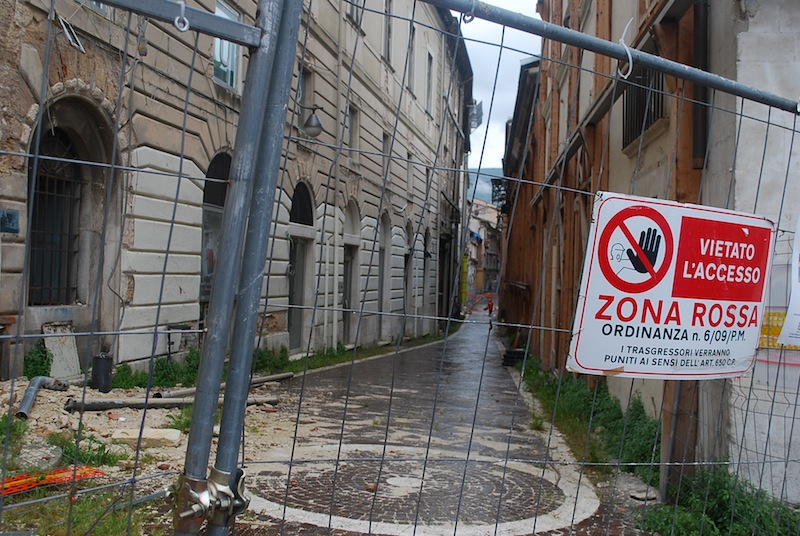
After a long series of shakes which started in December, a 5.9 Ml magnitude earthquake hit L’Aquila, main town of the Italian region Abruzzo, with epicentres through the whole town area and part of the province. The earthquake will take the lives of 309 people, other than 1600 injured and about 65,000 evacuated. A whole town and part of its province are down to a pile of ruins, the inhabitants forced to live for months in tents or hotels on the coast, the physical and psychological effects will never heal completely.
Four years have passed, the evacuee shelters established by the Italian civil protection have been cleared. Nonetheless there are still 22,000 people lacking a proper home: 12,300 have been relocated in emergency residential centres; 2700 are hosted in temporary housing modules; 6800 people are in private accommodations, while 240 more rented a place somewhere. Since the earthquake, L’Aquila’s population decreased by ten percent.
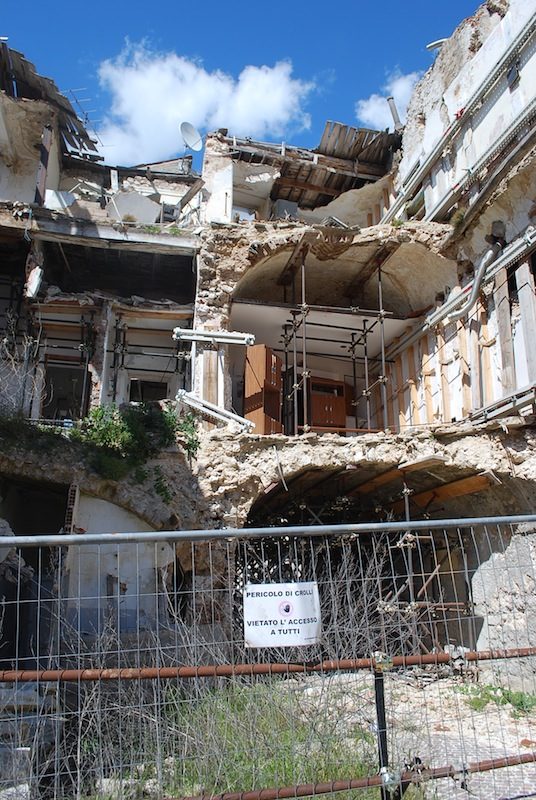
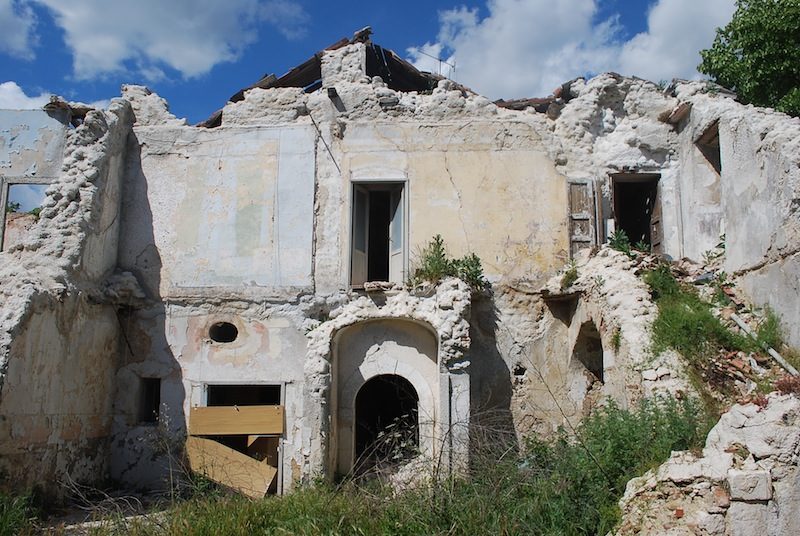
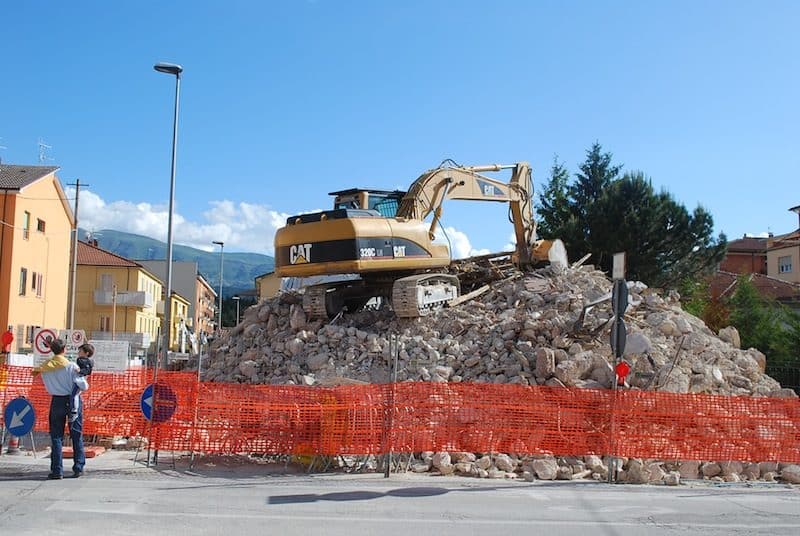
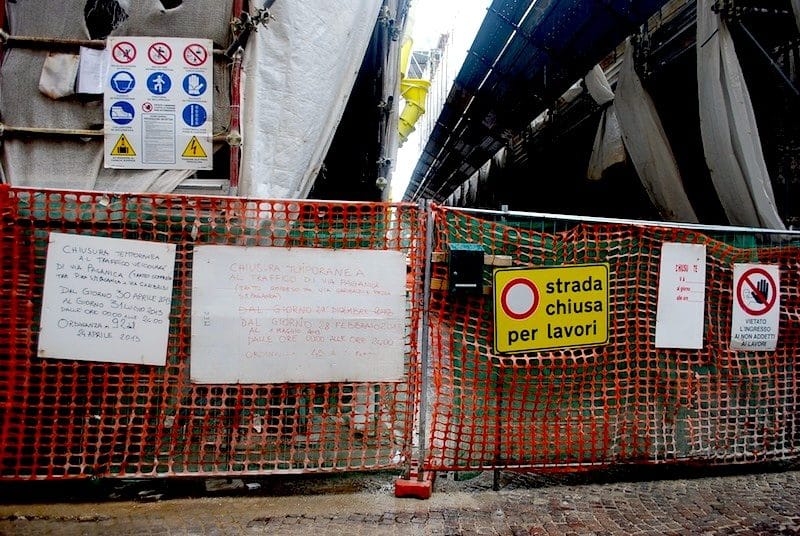
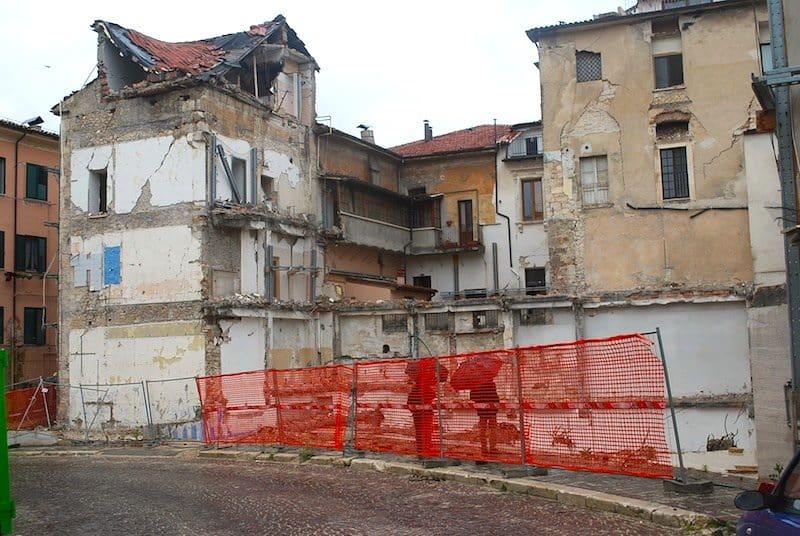
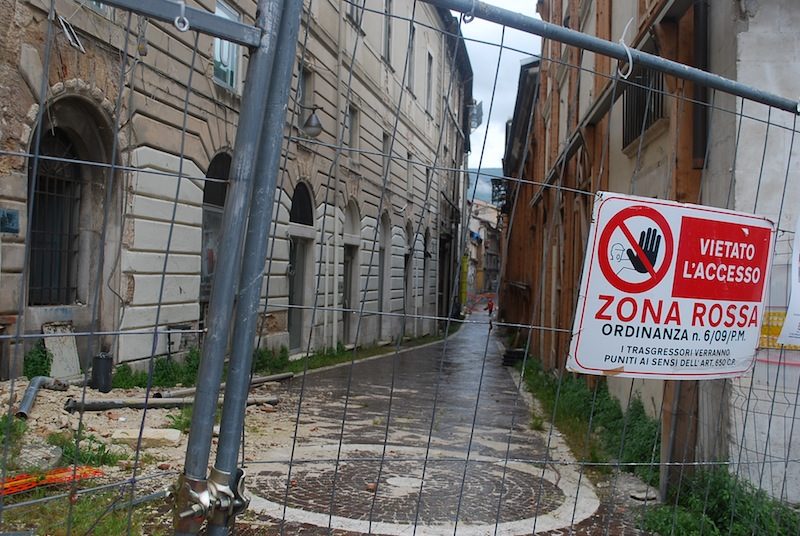
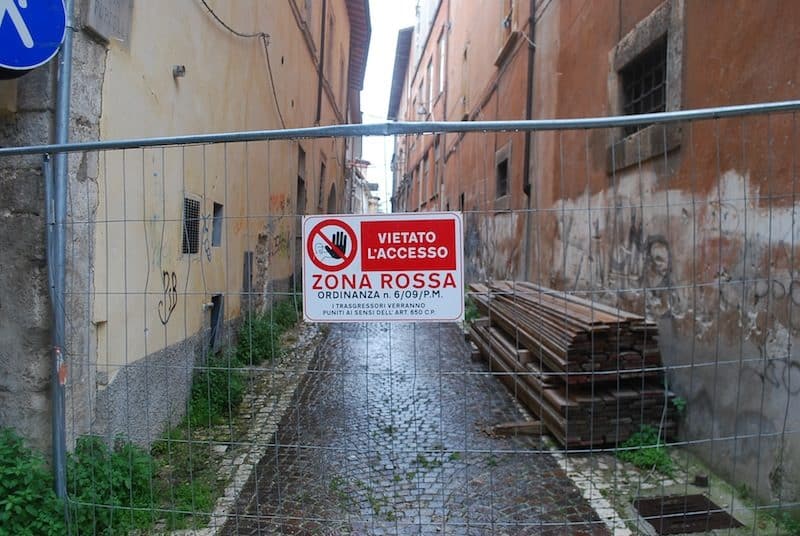
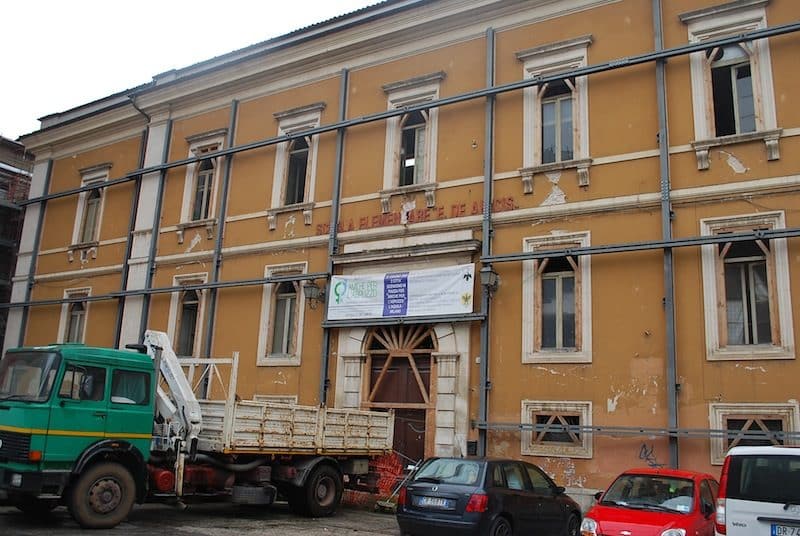
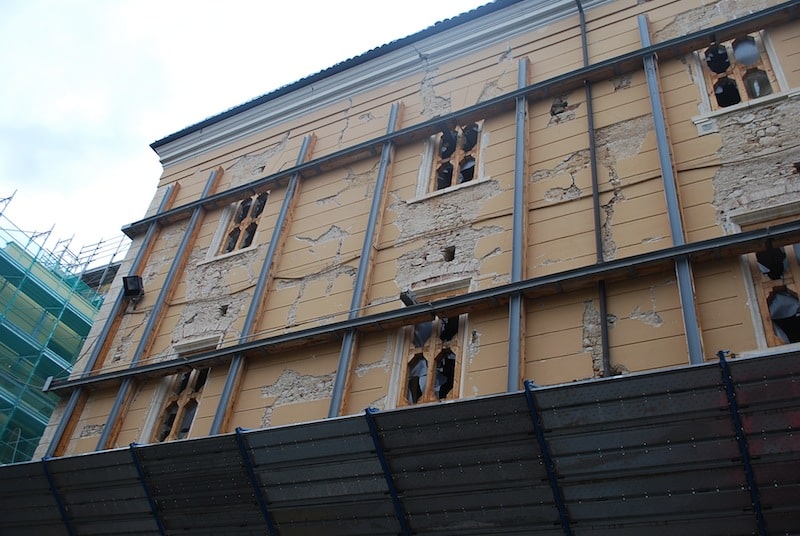
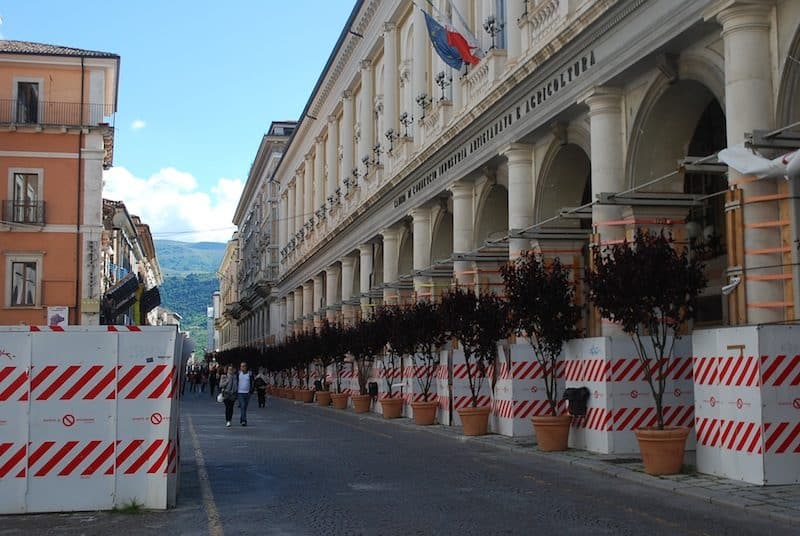
Walking among the city centre, the feeling is like moving around a huge building site. Coming from the highway I found the first viability modifications due to road rebuilding, and from there on every corner is framed by protective barriers, pits and danger signs. In Corso Vittorio Emanuele, L’Aquila’s main street, there every single building is exposed by activities to reestablish its conformity. Of the many shops, only a few opened again and the bars are but a handful and often do not host but some construction worker.
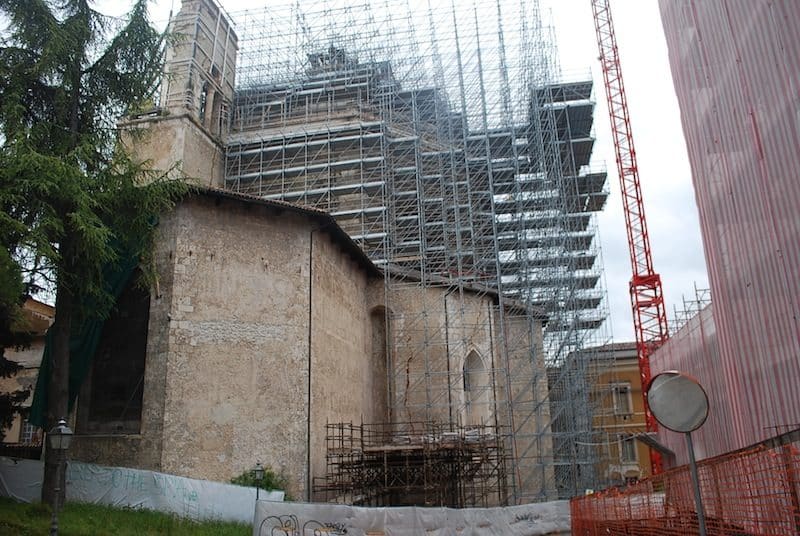
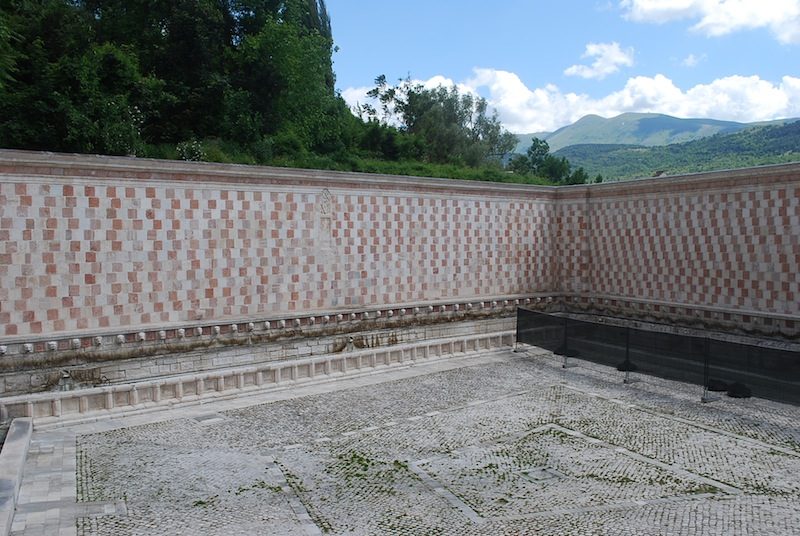
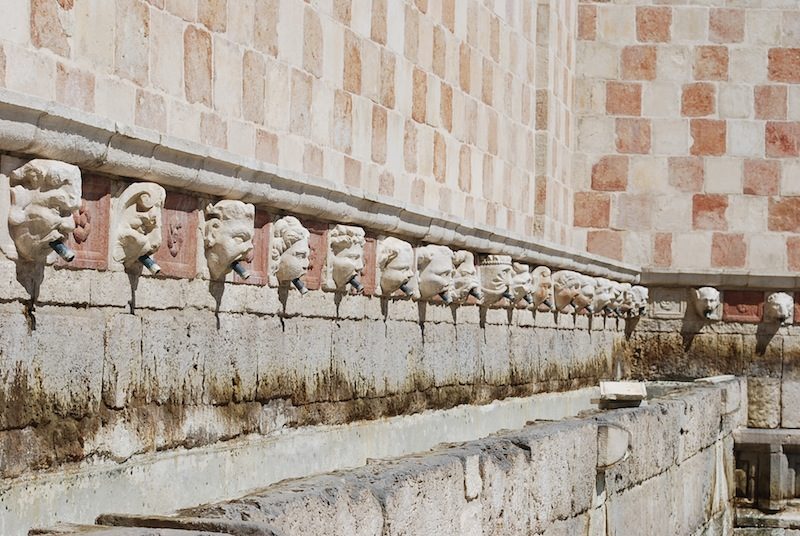
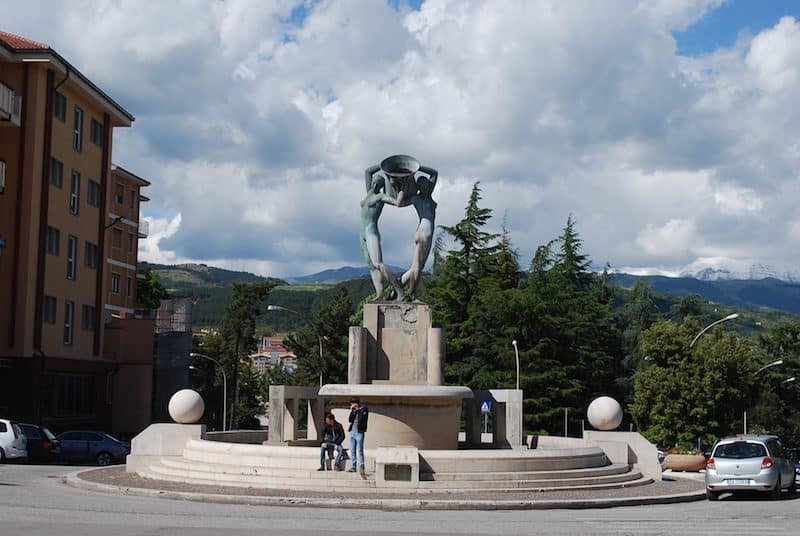
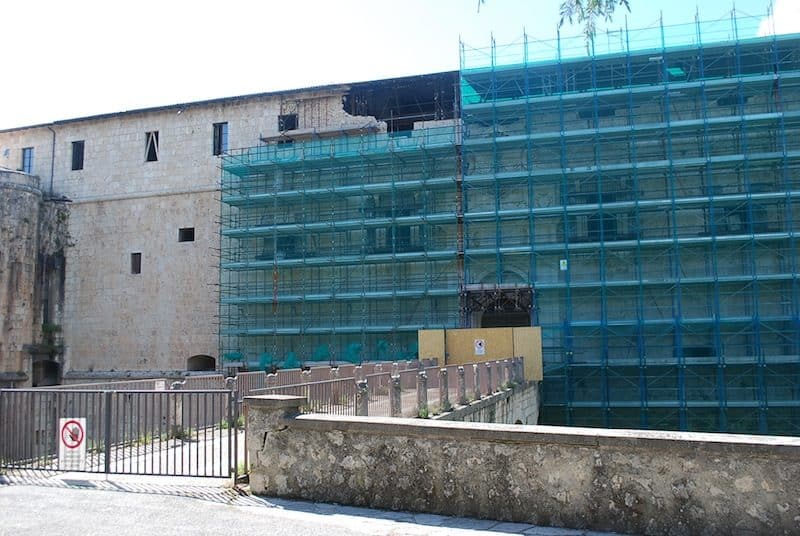
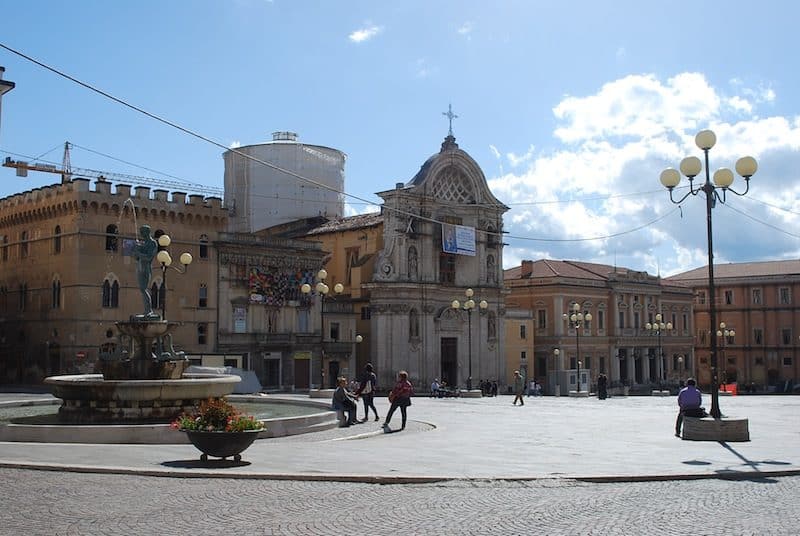
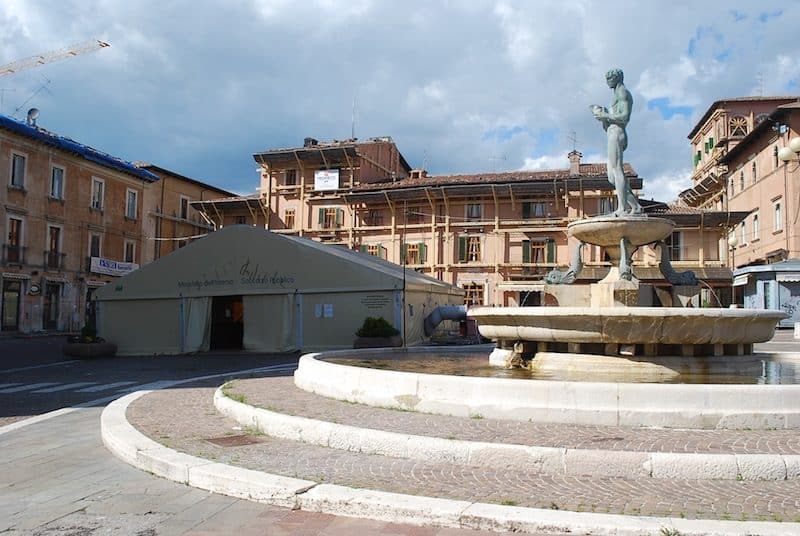
Fontana Luminosa – ‘Bright Fountain’ – is far less bright without water, and many streets are closed because they are into the infamous ‘red zones’. At the and of the corso, Piazza Duomo still hosts a public help tent, while the two churches – San Massimo Cathedral and Santa Maria – obscured by rebuilding works. On the longer side a large banner states: ‘A red zone, wherever it is, is always a national issue.’ Fontana delle 99 Cannelle – another historic fountain – has been restored, but at my arrival no water was running here as well, while the Forte Spagnolo – ‘Spanish Fortress’ – was closed for restoration.
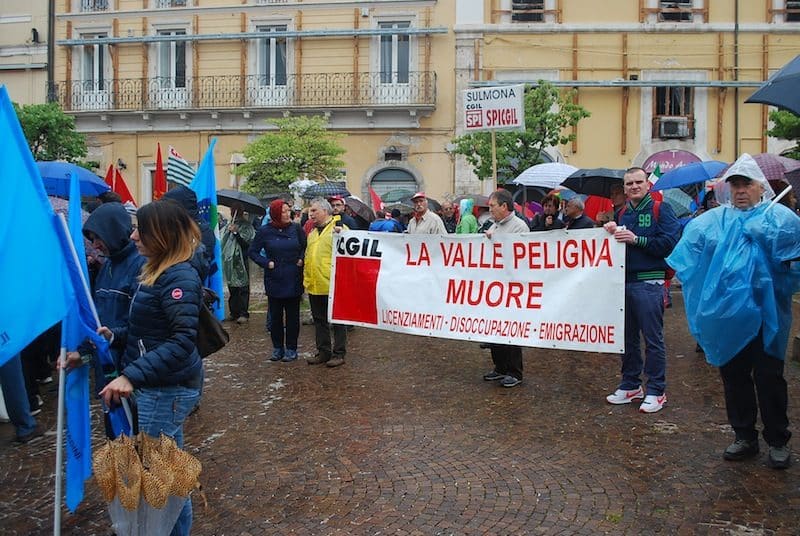
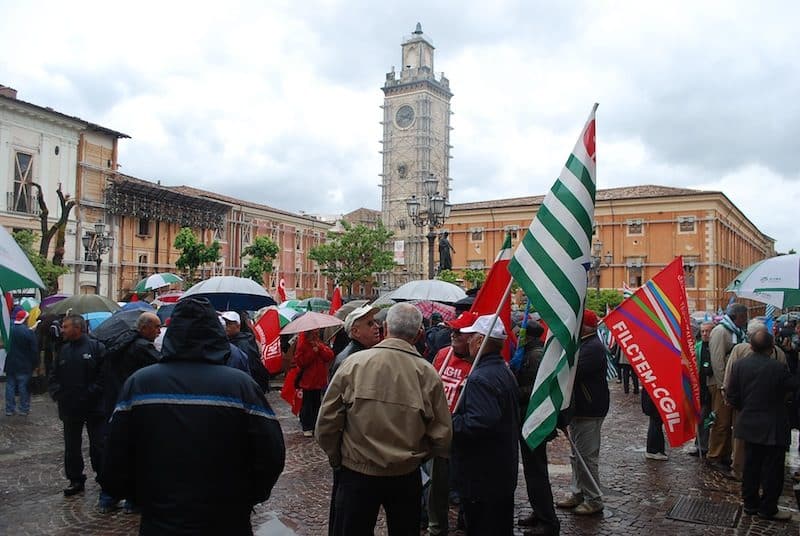
Saturday, June 1, there was the umpteenth regional rally on environment and employment in Abruzzo in Piazza del Palazzo. The Italian region broke any record about redundancy fund, with thousands of workers idle since years. The ruling class is blamed for grave political and financial faults, and in the air was the gloomy perception that the future will not be brighter than the past. The earthquake wiped out all artisans and retailers in the city centre, beside compromising the tourism industry.
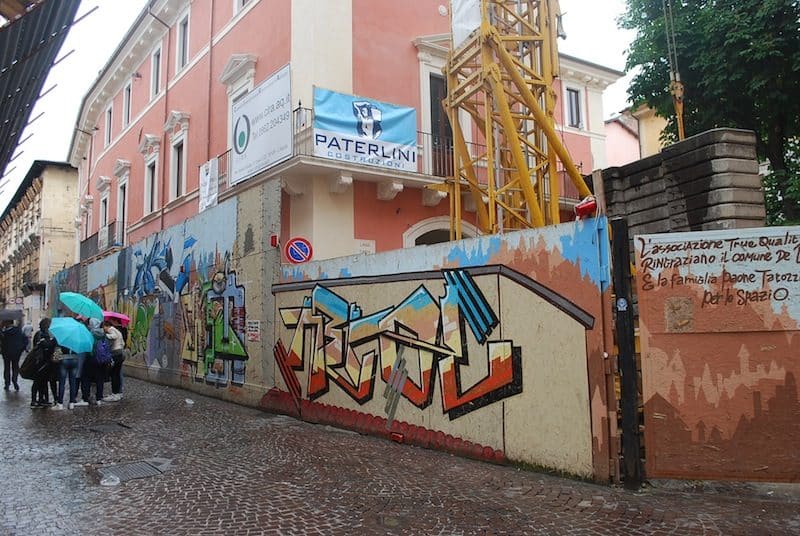
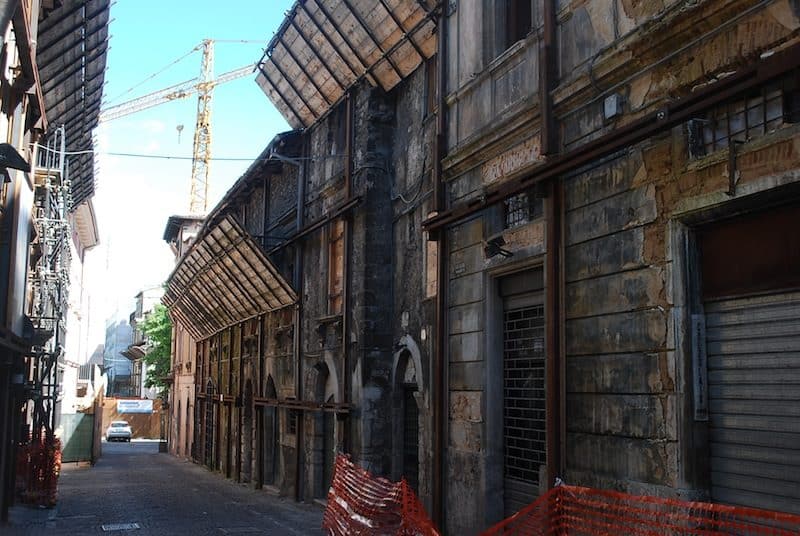
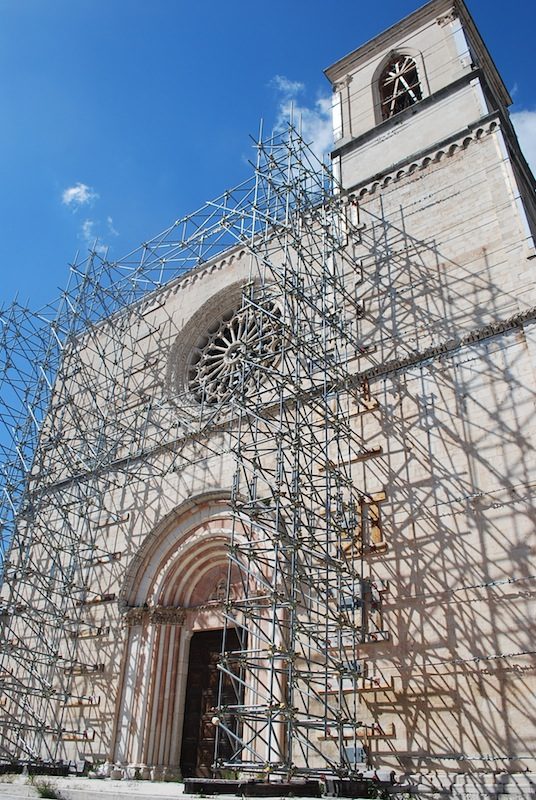
For a better understanding of the situation, I met 6aprile.it co-founder Corrado Mastropietro. My first question was if all the building sites I saw are related to the earthquake. Of course they are, it looks as politics and bureaucracy met up to slow down any activity as much as possible, through a dramatically complicated practice and the vile habit of shifting the blame always on the others. His tone does not surprise me: this awkwardness between public and institutions dates back to the first days after the earthquake, when some disquieting signs showed up in the refugee centres limiting free movement of people and banning public gatherings. On the other side, extreme thankfulness and respect are felt for the job done by military men and volunteers. Now just a few check point remain, probably to look out for profiteering: L’Aquila was practically a zero crime town before the earthquake, but the complete evacuation of some residential areas woke up the lowest instincts of humanity.
The rebuilding isn’t slowed down just by the lack of money – which in any case is a grave issue indeed – the problem is often how the available resources are used: the protective layers used to avoid the collapse of buildings, for example, are rent from private companies for a high price, and are often used to sustain buildings which have to be demolished in any case.
Another disquieting feeling comes from the method used to adjust the new buildings to the seismic danger acknowledged for the region of Abruzzo: L’Aquila is in an area which has been deemed at the highest level of danger, but the anti-seismic requirements imposed on the buildings aren’t on the same level and will probably fall down with the next earthquake. Moreover, the building companies need to respect the requirements to a minimum of just 80 percent.
Abruzzo is a wonderful region, rich with traditions and culture, and offers a convenient gateway towards natural wonders as the mountain area of Gran Sasso and Maiella, ideal destinations for hiking, trekking and climbing, other than rafting, mountain biking and much more. The local agritourismi offer great food for affordable prices and L’Aquila can be easily reached by car, train or plane. I can just hope that all these resources will prove enough for the region to arise more beautiful and prosper than ever.
Where is L’Aquila?

A degree in journalism and a professional limbo ranging from press offices to newspapers, magazines and finally the web. I lived in Verona, Zurich, London, Cape Town, Mumbai and Casablanca. I hate flying and I love jodel music. And when I grow up I wanna be a cosmonaut.
