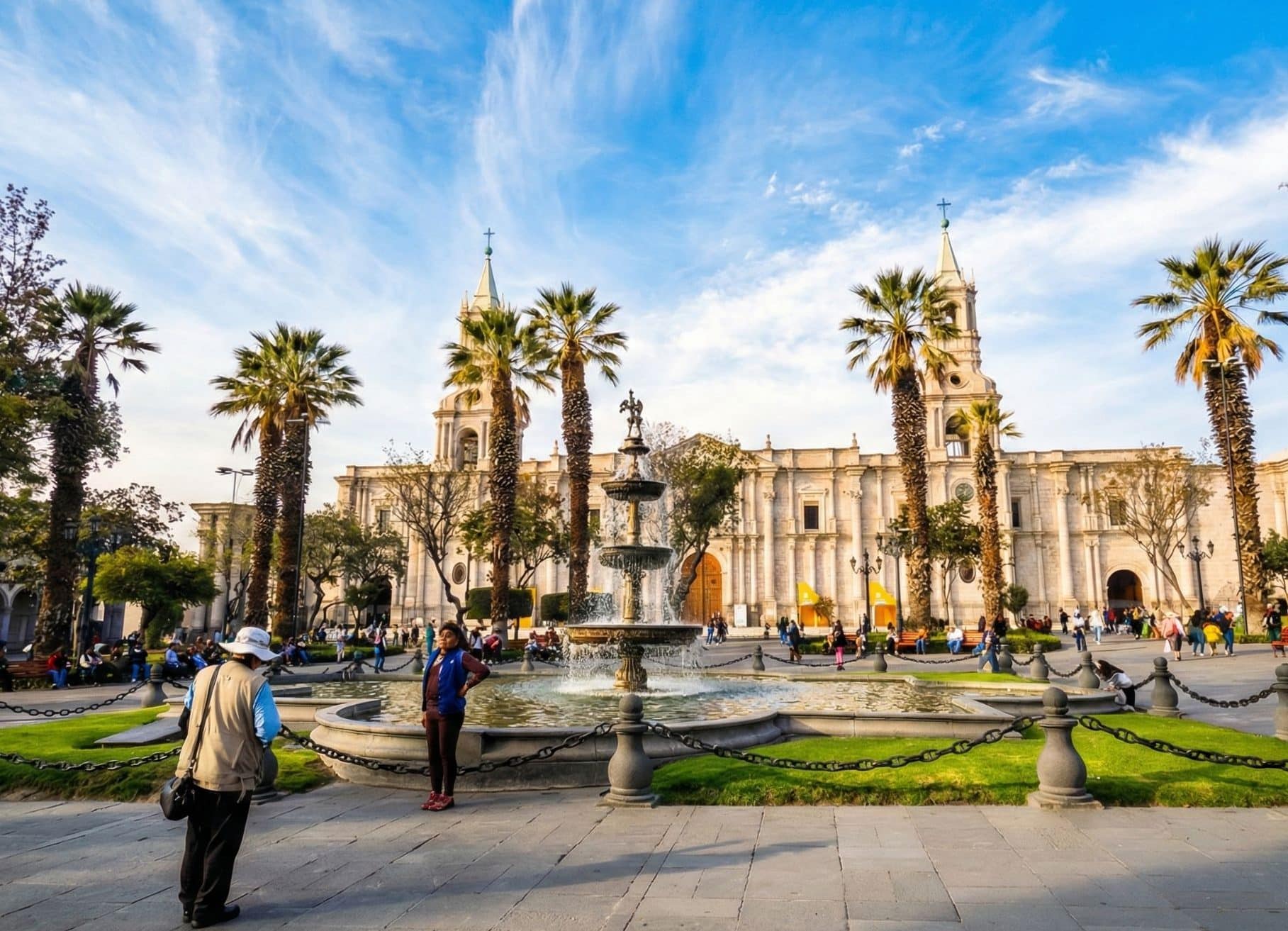
I first visited Arequipa more than 10 years ago with Felicity, during one of our early trips together in South America. Coming back now feels almost like reconnecting with an old acquaintance — familiar enough to recognise its colours and energy, yet exciting to rediscover with fresh eyes.
Leaving behind the bustle of Lima — where most international travellers land (read also my article Lima Travel Guide 2025: What to See, Eat and Do if you are interested in Lima) — your journey south to Arequipa feels like entering a different Peru. Smaller, brighter, framed by volcanoes and deeply rooted in colonial history, Arequipa is the perfect next stop if you’re looking for culture, good food, and dramatic high-altitude landscapes.
- Getting to Arequipa from Lima
- Don’t Underestimate the Altitude
- Where to Stay: Casa Andina Select Arequipa Plaza
- Best Things to Do in Arequipa
- 1. Santa Catalina Monastery
- 2. Visit Arequipa’s Cathedral – The Icon of the Plaza
- 3. Explore Arequipa’s Historic Churches
- 4. Museo Santuarios Andinos – Meet “Juanita”
- 5. Wander the Plaza de Armas
- 6. Eat Arequipeño Food
- 7. Enjoy the Volcano Views from Yanahuara District
- 8. Optional Day Trips from Arequipa
- 9. Visit Mundo Alpaca
- Where to Eat in Arequipa
- Final Thoughts
Getting to Arequipa from Lima
The easiest way to reach Arequipa from Lima is to fly. Several daily domestic flights connect Jorge Chávez International Airport to Arequipa’s Airport Rodríguez Ballón in just over 1 hour 30 minutes.
For independent travellers short on time, this is the most efficient option — buses take around 16–18 hours and involve an overnight journey along the coast.
How to Get From Arequipa Airport to the City Centre
Arequipa’s Rodríguez Ballón Airport is about 8 km from the city centre, making transfers simple and quick.
- Taxi or App-Based Ride (Recommended) – The easiest option is to take a registered airport taxi or use ride-hailing apps like Uber, Cabify, or InDriver. The journey takes around 20–25 minutes, depending on traffic.
- Official Airport Taxis – Safe and reliable, slightly more expensive but fixed-price. Ideal if you arrive late or want a hassle-free transfer.
- Public Transport – There are public minibuses, but they’re not practical with luggage and don’t stop directly at the terminal, so most travellers skip them.
Overall, a ride-hailing app or official taxi is the best choice — fast, cheap, and straightforward.

Don’t Underestimate the Altitude
Arequipa sits at roughly 2,335 metres above sea level. While it’s not as high as Cusco or Puno, you may still feel the difference after leaving sea-level Lima.
Tips for the altitude
- Take it slow on your first day
- Drink plenty of water
- Avoid heavy meals and alcohol until your body adjusts
Where to Stay: Casa Andina Select Arequipa Plaza
For a comfortable and perfectly located stay, I recommend Casa Andina Select Arequipa Plaza, right on the city’s main square. The location couldn’t be better: you’re literally steps from the Cathedral, surrounded by colonial arcades, and within walking distance of the city’s best restaurants, museums, and viewpoints.
One of the hotel’s highlights is the breakfast balcony, which overlooks the Plaza de Armas, offering unforgettable morning views of the Cathedral and, on clear days, Misti Volcano rising in the background. It’s a fantastic way to start the day while soaking in the atmosphere of the city.
The hotel also features a small rooftop pool, perfect for cooling off after sightseeing, as well as a rooftop area where you can enjoy sunset views over the square.

Best Things to Do in Arequipa
1. Santa Catalina Monastery
If there is one place in Arequipa you should not miss, it’s the Monasterio de Santa Catalina. More than just a monastery, it’s a city within the city: a maze of narrow alleys, vividly painted cloisters, private cells, courtyards filled with flowers, frescoes, and stories of the nuns who lived here since the 16th century.
Set aside at least 2 hours to explore. The atmosphere is peaceful and almost hypnotic — perfect for photographers and anyone interested in history. Visit early in the morning or late afternoon for the best light and fewer crowds.
I highly recommend visiting with a guide or joining a small group tour, as the stories, symbolism, and hidden details really come alive when someone explains the history and daily life inside the monastery.
This guided visit is a great option:
👉 Santa Catalina Monastery Tour


2. Visit Arequipa’s Cathedral – The Icon of the Plaza
The Cathedral of Arequipa, stretching across an entire side of the Plaza de Armas, is impossible to ignore. Built from white volcanic sillar stone, it’s a masterpiece of neoclassical architecture and one of the city’s most important landmarks.
What to See Inside the Arequipa Cathedral
Once you step inside, there are several highlights that truly stand out:
- The Belgian pulpit – Crafted in Belgium in the 19th century and considered one of the most beautiful in South America. It’s an extraordinary wooden sculpture featuring Saint Paul above and a serpent below, symbolising evil defeated by the divine word. This is almost certainly the piece you remembered — the stand with the serpent underneath.
- The monumental pipe organ – One of the largest historic organs on the continent, also made in Belgium. Its size and craftsmanship are impressive even if you’re not usually interested in sacred music.
- The Italian marble main altar – A bright, elegant work that dominates the central nave and showcases the Cathedral’s refined neoclassical style.
- The side chapels – Each dedicated to different saints, decorated with local silverwork and religious art.
- The Cathedral Museum (paid entry) – Home to liturgical garments, jewels, sacred art, and historical artefacts that reveal the story of the Cathedral’s construction and its importance in Arequipa’s religious life.
- The bell tower and rooftop terrace (guided visit) – Offering spectacular panoramic views over the Plaza de Armas and Misti Volcano. It’s one of the best viewpoints in the entire city.
Opening times
- The interior of the main cathedral is free to enter, but opening times may vary. When I visited it was open after 17:00 and it is free to enter.
- The Cathedral Museum and the climb to the bell towers/rooftop are not free. These areas operate separately with a small entrance fee and are usually open from 10:00 until around 17:00.
If you want the best views over the Plaza de Armas and Misti Volcano, the rooftop tour is absolutely worth it.
Dress Code
To enter the cathedral, a dress code is enforced:
- No shorts
- No sleeveless tops or vests
- Shoulders and knees must be covered
Visitors wearing shorts or sleeveless shirts are frequently turned away at the door.


3. Explore Arequipa’s Historic Churches
Arequipa’s religious architecture is among the most beautiful in Peru. Make time for:
Iglesia de la Compañía de Jesús
Famous for its elaborate mestizo baroque façade, a masterpiece carved in sillar stone that blends Spanish and indigenous motifs. Inside, don’t miss the dazzling Saint Ignatius Chapel, covered in vibrant murals. The attached cloisters are a peaceful escape from the busy streets — perfect for photography and a quiet moment in the shade.
Church of San Francisco
A quieter and more contemplative stop, set around a pleasant square with palm trees. The church complex includes a small museum, a historic library, and peaceful interior courtyards. It’s an excellent place to learn more about local religious art and monastic life, away from the crowds of the main square.
Santo Domingo Church
One of the oldest churches in Arequipa, known for its serene ambiance and simple yet elegant colonial architecture. The small courtyards and cloisters around the church give it a monastic feel, and it’s a nice add-on if you enjoy wandering slightly off the main tourist circuit.

4. Museo Santuarios Andinos – Meet “Juanita”
This museum is home to the famous Inca mummy Juanita, also known as the “Ice Maiden,” preserved after being discovered on Mount Ampato. The exhibition explains Inca rituals, the archaeological discoveries made in the area, and the significance of the region’s volcanic peaks. It’s one of the most insightful and moving museums in southern Peru.
Practical Information:
- Juanita’s Availability: For conservation reasons, Juanita is not always on display. During certain months (usually January–March), she is replaced by another mummy from the same archaeological site.
- Opening Hours: Generally Monday to Sunday, 9:00–18:00, though the last entry is usually about 45 minutes before closing.
- Entrance Fee: Around 25 soles for adults, with a small discount for students and children.
- Guided Tour Included: Visits are only allowed with a guide, and tours depart regularly in small groups.

5. Wander the Plaza de Armas
One of Peru’s most beautiful plazas, surrounded by colonial arcades and watched over by the Cathedral. Come early in the morning for soft light or return at sunset when the sillar stones turn golden.
If you stay at Casa Andina Select Arequipa Plaza, you are already right on the square, with immediate access to the arcades and views of the Cathedral. Their rooftop terrace offers a superb vantage point over the Plaza de Armas, making it easy to enjoy sunrise, sunset, and the lively atmosphere below without even leaving your hotel.


6. Eat Arequipeño Food
Arequipa is known for its rich, distinctive cuisine, and there are a few dishes you should make a point of trying while you’re here:
- Rocoto relleno – spicy stuffed pepper baked with cheese, a local classic.
- Chupe de camarones – a hearty prawn chowder packed with flavour.
- Adobo arequipeño – slow-cooked pork marinated in chicha de jora; traditionally eaten for breakfast.
- Cuy (guinea pig) – a traditional Andean dish, usually roasted. It’s not for everyone, but if you’re curious about local cuisine, Arequipa is a good place to try it.
- Queso helado – a typical Arequipeño “ice cream” made with milk, coconut, cinnamon, and cloves. Perfect on a warm afternoon.
Try one of the picanterías just outside the centre if you want a more authentic, local dining experience. These traditional eateries serve many of Arequipa’s iconic dishes the way they’ve been made for generations.


7. Enjoy the Volcano Views from Yanahuara District
Arequipa is framed by three iconic volcanoes: Misti, Chachani, and Pichu Pichu, and you’re constantly reminded of their presence as you wander through the city.
For the best viewpoint, head to the Yanahuara District, specifically the Plaza de Yanahuara, famous for its elegant stone arches carved with poetry. From here, you get one of the most iconic postcard views of Misti Volcano and the city spread out below.
Beyond the viewpoint, Yanahuara is also one of the most characterful neighbourhoods in Arequipa. The surrounding streets are lined with white sillar houses, quiet lanes, and small local cafés. It’s a beautiful area to wander aimlessly, soaking up the colonial atmosphere away from the traffic and noise of the city centre. Late afternoon is especially photogenic as the volcanic stone catches the warm light.


8. Optional Day Trips from Arequipa
If you have time, consider:
- Colca Canyon: one of the world’s deepest canyons and home to the Andean condor
- Salinas y Aguada Blanca National Reserve: flamingos, vicuñas, and amazing landscapes
- Sillar Route: visit the stone quarries and learn how Arequipa’s white buildings were created
9. Visit Mundo Alpaca
If you’re interested in Andean textiles and traditional weaving, don’t miss Mundo Alpaca, located just a short walk from the centre. It’s a combination of interactive museum, weaving demonstration space, and boutique.
- Learn how alpaca wool is processed and dyed using natural pigments
- Watch local artisans at work on traditional looms
- Visit the small living area with real alpacas and llamas
- Explore the on-site museum of textiles and shop for high-quality garments made from baby alpaca
Entry is free, and it’s an excellent place to support local craftsmanship while getting a deeper understanding of the cultural and economic importance of alpacas in southern Peru.


Where to Eat in Arequipa
Arequipa is one of Peru’s most exciting culinary destinations, and during our stay we had the chance to try a mix of contemporary Peruvian cuisine, traditional picanterías, and unforgettable community-based meals in the Colca Valley. Here are the places we experienced and genuinely recommend.
13 Monjas – modern Peruvian with a colonial vibe
Address: Calle Santa Catalina 300b1
We kicked off our Arequipa food experience with lunch at 13 Monjas, a stylish, modern Peruvian restaurant just steps from the Santa Catalina Monastery. The setting blends colonial architecture with contemporary design, and the menu offers beautifully presented dishes using regional ingredients. It’s a great spot for a relaxed lunch before diving deeper into the historic centre.

Chicha by Gastón Acurio – tradition reimagined
Address: Santa Catalina 210
For dinner, Chicha was an ideal choice. Created by Peru’s celebrated chef Gastón Acurio, this restaurant takes classic Arequipeñan recipes — like rocoto relleno, cuy, or chupe de camarones — and elevates them with creative touches. The atmosphere is warm and intimate, set inside a restored colonial house. If there’s one dinner you book ahead, make it this one.
Victoria Picantería Democrática – classic Arequipeñan soul food
Address: Calle Zela 200 B
No visit to Arequipa is complete without eating in a picantería. We stopped for lunch at Victoria Picantería Democrática, a local institution that feels part museum, part restaurant. Expect big flavours and traditional dishes served in a lively, rustic setting. It’s the kind of place where you come hungry and leave absolutely satisfied.

CLAN – gourmet dining in the historic centre
Address: Calle Santa Catalina 105
For our final dinner, we opted for CLAN, a sophisticated gourmet restaurant just off Santa Catalina. The tasting menus and à la carte dishes showcase contemporary Peruvian cuisine with artistic presentation and excellent technique. Ideal for travellers looking for a refined culinary experience to close their stay in Arequipa.


Final Thoughts
Coming back to Arequipa more than ten years after visiting with Felicity felt strangely comforting — like stepping into an old photograph where the colours have barely faded. Some cities change fast, but Arequipa still carries that familiar warmth, the same golden light on the sillar walls, and the same gentle rhythm in its streets.
This time I explored it on my own, yet it didn’t feel lonely. The city has a way of welcoming you back, of reminding you why you fell in love with Peru in the first place. From the first glimpse of Misti through the morning haze to the quiet corners of Santa Catalina and the flavours of its picanterías, Arequipa remains a place where time seems to move differently — slower, richer, more meaningful.
It’s the perfect bridge between Lima’s urban buzz and the higher altitudes of the Andes, but it’s also a city that stands beautifully on its own. A place to wander, to reflect, and to let the history of centuries sink in. And for me, returning after all these years, it felt a little like coming home.

Lived in England since 1998 and travelled the world since 2005, visiting over 100 countries on 5 continents. Writer, blogger, photographer with a passion for adventure and travel, discovering those off beat places not yet on the tourist trail. Marco contributes the very best in independent travel tips and lifestyle articles.
