Leaving Arequipa city already feels like a journey in itself. Traffic is slow and chaotic, and it can easily take almost an hour just to leave the urban sprawl behind. But once the city fades away, everything changes quickly. The road climbs steadily along the Carretera Arequipa–Chivay (PE-34A), the main route connecting Arequipa with Chivay and the Colca Valley. It crosses the vast Reserva Nacional Salinas y Aguada Blanca, one of the most striking high-altitude landscapes in southern Peru.

At around 4,000 metres, the plateau of Pampa Cañahuas opens up in front of you. Alpacas, vicuñas and pekuñas graze undisturbed across endless grasslands, while the perfect silhouettes of volcanoes stand on the horizon like ancient guardians. There’s also a bar / restaurant here — a simple but welcome stop at altitude — where you can order typical herbal infusions such as coca leaf tea, traditionally used to help with altitude and digestion, along with other local herbal teas that warm you up and help your body adapt to the thin air.


This is the kind of Peru that gets under your skin. It fills your eyes and, quite literally, takes your breath away.
Day 1 – Sibayo: life at 4,000 metres
The road continues into the Colca Valley, reaching the small community of Sibayo. Here, the Andes feel infinite. A handful of houses, a few children playing outside, the quiet rhythm of daily life shaped by altitude and tradition. Peace and stillness rule everything.
I stayed with a local family at Casa Vivencial Samana Wasi, a tiny guesthouse where simplicity is part of the experience. My room was basic, but it had everything I needed: a double bed, a few blankets for the cold nights, and a bathroom with a simple shower. There was no heating, of course, but even when the outside temperature dropped to -10 at night, I was perfectly fine in my bed.


During the afternoon we met a local lady that owns a small number of alpacas and llamas, which are her main source of income. We walked together with her and the animals to the edge of town, reaching a small bridge that marks the start of an ancient path. From here, the trail can continue all the way to Cusco. In the past, people from this area used to walk for around fifteen days to reach the imperial city.


I also visited the small local cemetery, set on a rise with beautiful views over the town — a humbling reminder of how deeply rooted life is in this land.


The day ended in the best possible way: a simple dinner of soup and a bit of meat with rice — basic, but absolutely delicious and a small celebration at home, with music and songs. Nothing staged, nothing forced. Just people opening their doors and sharing a moment of their everyday life. This is authentic Peru, far away from civilisation.


Day 2 – Condors over the Colca Canyon
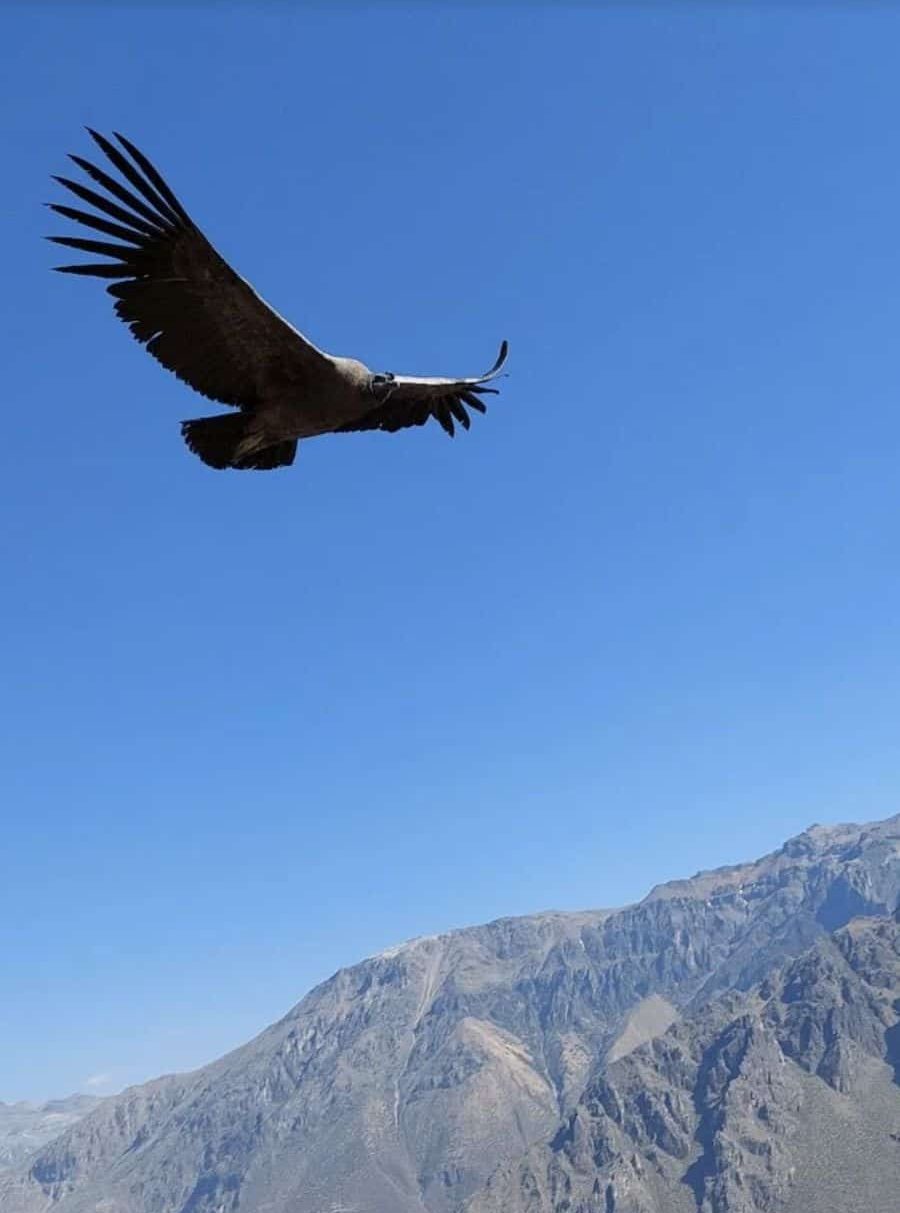
One of the most emotional moments of this journey came in the Colca Valley itself. Leaving early in the morning, it’s about a one-hour drive to reach the Mirador de los Andes. I wasn’t expecting to be completely alone, but I was surprised by how many Western tour groups arrive here very early, often before 7am, all hoping for the same moment. Standing at the viewpoint, with the vast canyon opening up below, I watched a condor fly incredibly close, gliding effortlessly above the landscape.
I was there with my guide Richard — who by now I consider a friend — and it was the first time in my life that I had seen a condor in the wild. Seeing such a powerful bird soaring free, so close you can almost hear the air moving under its wings, is something that stays with you forever.
Waking up early was absolutely worth it: condors take flight only in the first hours of the morning, when the rising air currents lift them above the valley.


Hot springs
After the raw intensity of the canyon and the early start, the journey continues with another hour of driving through the valley, stopping in the small town of Maca. Here you’ll find souvenir shops, local stalls, and a church that dominates the village, offering a brief glimpse into everyday life in the Colca Valley.

From here, the Colca Valley reveals a gentler side. Colca Lodge has five natural thermal pools, each with a different temperature, fed directly by geothermal springs and set right next to the river. Soaking in these warm waters in the afternoon, surrounded by mountains and silence, felt like the perfect way to slow everything down again. The contrast between the warm water, the cool mountain air, and the sound of the river nearby created a moment of complete calm. The lodge has its own bar right by the pools, making it easy to linger longer, drink in hand, as the afternoon slowly fades into evening.
Dinner at the lodge closed the day softly, reflecting on everything seen and experienced over the last couple of days.


Day 3 – Back to Arequipa
The following morning, after breakfast, it was time to leave the Colca Valley behind and drive back to Arequipa. On the way, we stopped once again at the Mirador de los Andes, near Patapampa, at around 4,910 metres above sea level — one of the highest points on the route. From here, you can see several iconic volcanoes of southern Peru, including Misti, Chachani, Pichu Pichu, and, on clear days, Ampato, Sabancaya and Hualca Hualca. The road retraces the same dramatic landscapes in reverse — high plateaus, wide-open spaces and volcanoes on the horizon — offering one last reminder of just how vast and powerful this part of Peru is.
Slowly, the altitude drops, traffic increases, and the quiet of the Andes gives way to the noise of the city again. After days spent between remote villages, condors, and thermal pools, returning to Arequipa feels like closing a chapter — one that stays with you long after the journey ends.


Small purchases, real connections
At almost every touristy stop along the Colca route — viewpoints, villages, roadside stops — you’ll meet local women selling souvenirs, jumpers, hats and scarves. It’s easy to be sceptical, especially knowing that a jumper sold for around ten euros is probably made with only a small percentage of alpaca wool.
And yet, I bought one anyway — actually two. One for me, and one to take back home to Felicity.
They’re soft and warm enough for cold days, with simple patterns that instantly bring me back to Peru. More importantly, buying them felt like a small but direct way of supporting people who make a living from these sales. For many families here, this is not a side activity but an essential source of income.
These jumpers may not be luxury items, but they carry something far more valuable: a memory of the road, of conversations at altitude, and of people doing their best to make a living in a harsh but beautiful environment.
Useful tips for visiting the Colca Valley
What to bring
- Warm layers for early mornings and cold nights at altitude
- A good jacket, plus hat and gloves
- Comfortable walking shoes for villages and viewpoints
- Sunscreen and sunglasses (the sun at 4,000–5,000 metres is strong)
Where most people stay
- Most visitors base themselves in Chivay or Yanque, where the majority of hotels and organised tours are located
- If you’re looking for something more unique, remote and with very few tourists, Sibayo is an excellent choice
How to organise your visit
- Many travellers choose an organised day tour to the Colca Canyon, which can be booked in advance online or once in Peru.
- These tours are convenient if you’re short on time and want to see the highlights in a single day. You can find some here.
- My advise is to spend at least 2 days in the Colca Valley – Here you can find a good 2 days tour including accommodation.
- It’s also perfectly possible to explore the Colca Valley independently, either by renting a car or using public buses, which connect Arequipa, Chivay and the surrounding villages.
Altitude awareness
- Altitude is no joke in this part of Peru
- On my first night in Sibayo, I had a headache and felt slightly sick
- Take things slowly, drink plenty of water and avoid alcohol at first
- Coca leaf tea is widely available and traditionally used to help with altitude symptoms
Listening to your body and allowing time to acclimatise will make the experience far more enjoyable.
Why this part of Peru matters
Travelling from Arequipa into the Colca Valley isn’t just about ticking off famous viewpoints. It’s about distance — from cities, from noise, from habits — and about reconnecting with a more essential way of living. Community stays, shared meals, simple rooms, early mornings and vast landscapes all play a part.
And if you’re exploring Peru more deeply, this journey fits perfectly alongside experiences like visiting Lake Titicaca and Taquile Island or spending time discovering the capital with this Lima travel guide.
This stretch of Peru doesn’t try to impress you. It simply exists. And that’s exactly why it stays with you long after you leave.

Lived in England since 1998 and travelled the world since 2005, visiting over 100 countries on 5 continents. Writer, blogger, photographer with a passion for adventure and travel, discovering those off beat places not yet on the tourist trail. Marco contributes the very best in independent travel tips and lifestyle articles.
